Sleep, energy, and longevity — why sleeping well is clinical strategy

TL;DR
Sleep is not passive rest — it is the interval where metabolic repair, cognitive consolidation, and hormonal regulation happen. Neglecting sleep is neglecting outcomes.
In our clinical practice at Plenya, smart patients frequently tell our team they sleep “around six hours” and are “fine that way.” They are wrong — and it is not a matter of opinion.
What happens when you sleep
During deep sleep, the glymphatic system clears metabolites from the brain. Growth hormone is released. Short-term memory migrates to long-term. Insulin reorganizes. Cortisol falls. The immune system recalibrates.
All of this in specific windows, controlled by the circadian rhythm.
Why six hours is not enough
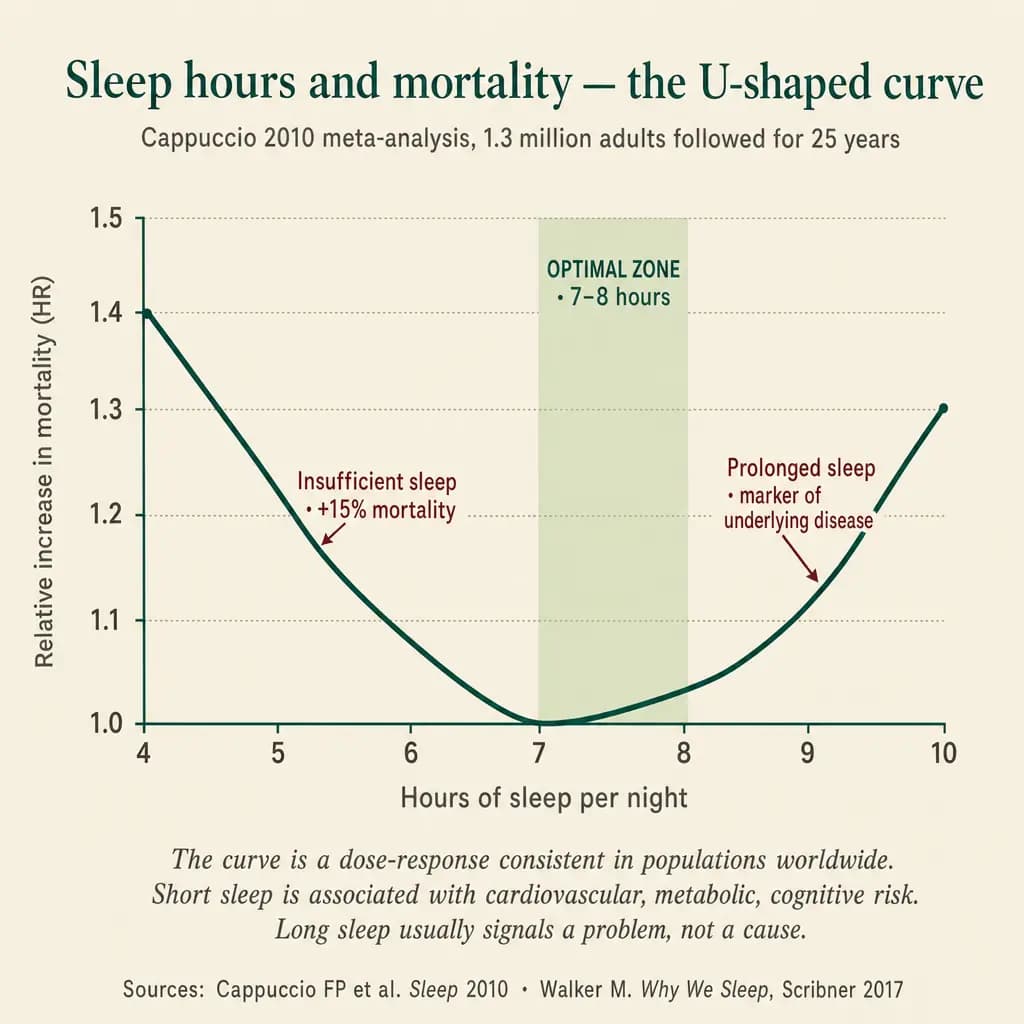
Consistent population studies show increased all-cause mortality in those who sleep less than seven hours. It is not a small curve — it is dose-response.
Beyond that: the sleep debt is not fully recovered on the weekend. The “debt” accumulates, and cardiometabolic markers reflect it.
What we measure in Plenya follow-up
Through The ACTS Method (Activity, Alimentation & Smart Adjuncts · Clinical Optimization · Tending Mind, Body & Bonds · Sleep, Rhythm & Recovery) we apply, sleep does not become intuition. It becomes data. Our team assesses:
- Average duration and variability
- Latency (how long to fall asleep)
- Efficiency (time in bed vs. time asleep)
- Symptoms of obstructive apnea
- Individual chronotype
- Quality of light in the morning and at night
From there, specific interventions — not generic advice.
The most underestimated intervention
It is not melatonin. It is not blackout. It is light at the right time — direct sun in the eyes within the first 30 minutes after waking, and absence of blue light in the two hours before bed.
Most patients we follow who adjust this improve sleep quality in two weeks, without any other change.
Sleep is not rest. It is clinical operation.
References